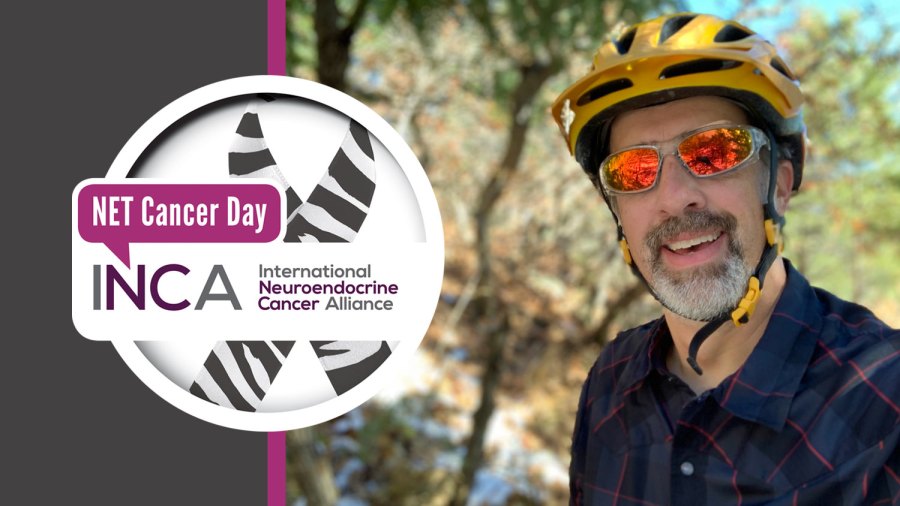
Today (November 10th) is NET Cancer awareness day, which gives me the nudge I need to finally write a new post. As the universe would have it, I’m also experiencing some of the not-so-fun stomach symptoms that go along with gastrointestinal NETs, as if to say “hey, don’t forget”.
Alas, I haven’t forgotten about this blog or any of you. I just haven’t made writing a priority. Which in my world means I feel like I need to write the next great novel when a nice, simple post would be just fine. Anyway, like Dalton, our oldest says, “it’s been a minute”, and I’m glad to be revisiting my writing, even if it’s just to say “hi”. Today, however, I’m here to do my part to spread the word about this rare disease to increase awareness and help people gain access to information. This year’s NET Cancer awareness day is all about ACCESS:
- Access to information
- Access to support
- Access to care and treatment
- Access to research and funding
A year ago on November 10th, 2018, I couldn’t even pronounce the word neuroendocrine, even after just having a NET tumor removed a month earlier. At that point, this all seemed like an odd, isolated incident that had been caught early and treated. Unlike my usual self, I’d limited my research to avoid additional anxiety and internet doomsday diagnosis syndrome.
Fast-forward one year. I’ve taken a personalized crash course on neuroendocrine cancer. It’s the kind of life tuition I’d rather avoid, but I’ve finished my freshmen year with a much better understanding of both the subject and myself. So I’m going to deviate from my typical writing to provide the CliffsNotes (or SparkNotes for the millennials out there) on NET tumors.
Key facts about NET tumors provided by the International Neuroendocrine Cancer Alliance (INCA):
- SCAN global survey interim results show that 44% of patients are initially misdiagnosed.
- The disease has spread to other organs by the time 53% of patients receive the correct diagnosis.
- 84% of NET patients lack information
- There is currently no cure for the majority of patients
- Frequently misdiagnosed with conditions such as: anxiety, menopause, gastritis, Irritable Bowel Syndrome (IBS), asthma or diabetes
- Affecting 7 in every 100,000 people around the world, NETs are defined as a less common cancer, with incidence similar to that of brain tumors, thyroid cancers, liver cancers, pancreatic cancers and kidney cancer, yet awareness amongst the medical community and general public is still relatively low.
- Did you know Aretha Franklin and Steve Jobs died from NET Cancer?
So much of what I’ve learned and read describes much of my experience. Here’s a recap of my journey so far and what lead to my diagnosis. Hopefully, it will help someone out there.
- 2006 – Woke-up one morning with indigestion, bloating and stomach discomfort that wouldn’t seem to go away and flared-up daily.
- Gastroenterology – Began to get my first endoscopies and other tests focusing on standard gastrointestinal disorders. No clear diagnosis and multiple medications had no results.
- Gastroparesis – After months and months with no progress, a gastric emptying study seemed to point to a diagnosis of gastroparesis, a condition where digestion slows down considerably. My symptoms didn’t line up completely, but it seemed to be the best explanation for my issues.
- 2007-2008 – I was told gastroparesis would typically take as much as a year to resolve itself. Two years later, I was still having symptoms that could only be controlled through a medication ordered from Canada.
- On-going symptoms – For years and years, stomach symptoms persisted. Indigestion, bloating, abdominal sensitivity to the touch, frequent trips to the restroom and sensitivity to certain foods, like cured meats were always consistent.
- On-going doctors and testing – Re-assessing my situation with every doctor’s office visit and specialist, I’m told that a sensitive stomach, IBS or another non-specific stomach issue is all that’s going on. Another gastric emptying study shows my stomach digestion is now normal.
- 2017 – Following a sinus infection I start getting random facial flushing episodes, usually after eating or while riding my bike. I’m sent to an ENT and allergist.
- 2017-2018 – After my wife Jenny sees me having a flushing episode, I realize it’s more intense than I had understood. Throwing on her Apple Watch I notice my resting heart rate is elevated.
- 2018 – Google research on flushing, elevated heart rate, cured meats, frequent bathroom trips and bloating lead me to an article on Carcinoid Syndrome. I ask my GP about it and although it seems like a long-shot, I get some tests.
- Testing, testing – My blood serotonin rate is around 10x normal, leading me to a slew of other tests and eventually a full-body PET scan. The PET scan picks-up a single tumor outside of my small intestine. I have another endoscopy and a colonoscopy to check for any other stomach issues.
- October 2018 – I go to a surgeon in Denver to have the tumor removed along with a small piece of intestine. It proves to be a NET tumor, not in a typical location for a single tumor. The surgeon feels confident they’ve found the only tumor, caught early and that I should start feeling better. Within a week I’m having flushing episodes.
- December 2018 – I receive a highly specialized, newly FDA approved test called a Gallium-68 PET/CT Scan created specifically to detect NET tumors. The results show one tumor in my small intestine and 20+ tumors that have moved to my liver.
- January 2019 – I start receiving Lanreotide injections, a synthetic form of a natural hormone designed to stabilize and/or shrink the tumors and keep from over-secreting hormones. These injections have an off-the-shelf cost of over $20k per month.
- April 2019 – After months of fighting with insurance, I finally receive an approved referral to see Dr. Eric Liu, a NET tumor specialist in Denver. An MRI seems to show the tumors are stable and possibly shrinking. Dr. Liu outlines a plan that will likely involve a bigger surgery in the coming years. Note – this is the first time I feel like I have any real information and understanding about what I have and how to treat it.
- July 2019 – I’m denied twice for a medication called Xermello by my insurance even after an appeal from my oncologist.
- August 2019 – I’m hospitalized for a bowel obstruction resulting from a narrowing of the intestine at the surgery site. Luckily the blockage clears itself and after a few awful days, I get to go home. A low-fiber/residue diet is recommended and it’s likely I’ll need surgery again to fix in the future.
- November 10, 2019 – I write this post while I wait for an MRI in December, and a change to a new insurance provider so I can see Dr. Liu in-network.
Please feel free to share any and all information you find here. I promise my next post won’t be quite so clinical. I hope all of your pre-holiday seasons are off to a great start!
 Schell Shocked